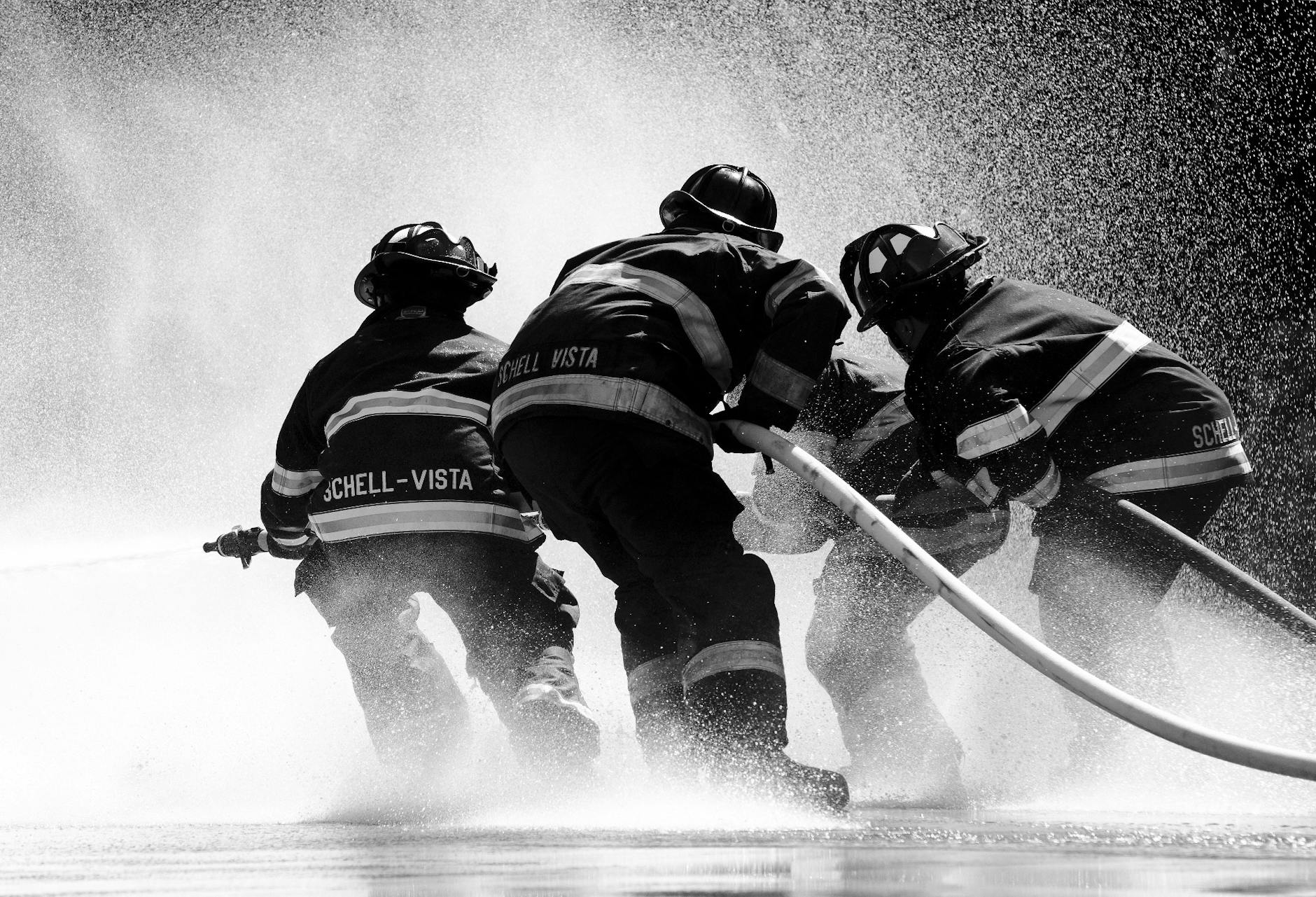
Firefighting is not “just cardio,” and it’s not “just strength.” It’s repeated high-output work under load (PPE/SCBA, tools, heat, stress), with short recovery windows, and the expectation that you can do it again and again until the incident is over.
That’s why “engine building” for firefighters should train three things at the same time:
- Aerobic base (your recovery engine)
- Anaerobic power + repeatability (your burst engine)
- Strength and durability (your chassis)
- Planned recovery (so you can actually adapt)
Here, we lay out a practical, research-supported plan you can run for 12 weeks, then repeat or progress.
Why engine building matters in the fire service
Cardiovascular events are the leading cause of line-of-duty firefighter deaths, not burns or smoke inhalation. (New England Journal of Medicine) That doesn’t mean fitness makes you invincible, but it does mean cardiorespiratory readiness is not optional.
From a standards standpoint, NFPA 1582 includes guidance that an appropriate aerobic fitness target for firefighting is a predicted 12 METs or greater. (NFPA) (12 METs is roughly ~42 mL/kg/min VO₂max in many conversions; it’s commonly referenced in fire service medical guidance. (IAFC))
From an injury standpoint, aerobic fitness isn’t just about “being in shape.” In a large study of firefighters, those in the lowest aerobic fitness group (VO₂max < 43 mL/kg/min) were about 2.2× more likely to get injured than those in the highest group. (PubMed)
And performance-wise, VO₂max (especially absolute VO₂max) shows meaningful relationships with firefighter task efficiency in the research literature. (PubMed)
The mistake most firefighters make
Many programs accidentally become:
- Too much hard work, too often, with no base → you feel smoked, progress stalls, nagging injuries climb.
- Or only long slow cardio, with no intensity → you can jog, but you can’t recover quickly between hard fireground bouts.
- Or only lifting, and conditioning becomes “whatever happens on shift” → which is unpredictable and often not enough.
Engine building works best when you plan the week:
- 2–3 aerobic sessions (mostly easy/moderate)
- 1–2 high-intensity sessions (smart, controlled)
- 2 strength sessions
- 1 true rest day
That structure also lines up well with widely accepted public health training minimums (aerobic volume + 2 strength days). (ACSM)
Your intensity zones (simple and accurate)
You don’t need fancy testing to train correctly. Use any mix of these:
Zone 2 (easy aerobic base)
- You can speak in full sentences
- RPE (Rate of Perceived Exertion) 3–4/10
- Purpose: recovery capacity, endurance under load, heart “efficiency”
Tempo / Threshold (hard sustainable)
- Short phrases only
- RPE 6–7/10
- Purpose: teaches you to work hard without blowing up, improves lactate clearance
VO₂max intervals (very hard)
- Can’t talk, heavy breathing
- RPE 8–9/10
- Purpose: raises your “ceiling” fast (bigger engine)
The program: 12-week Firefighter Engine Build
Weekly layout (repeat weekly, progress over time)
Day 1 – Strength A (heavy + trunk + carries)
Day 2 – Zone 2 aerobic (45–60 min)
Day 3 – VO₂max intervals (4×4 protocol)
Day 4 – Active recovery (easy + mobility)
Day 5 – Strength B (power + full-body + grip)
Day 6 – Tempo or Fireground Repeatability session
Day 7 – Full rest
This structure is also consistent with the fire service’s broader wellness/fitness approach emphasized by national initiatives and NFPA fitness-program standards. (IAFF)
The sessions (exact prescriptions)
Day 1: Strength A
Goal: build strength without trashing recovery.
- Trap bar deadlift: 4×3–5
- Front squat or goblet squat: 3×5–8
- Bench press or weighted push-up: 4×4–6
- Row or pull-ups: 4×6–10
- Farmer carries: 6–10 minutes total (short trips, heavy)
- Trunk: dead bug + side plank: 8–10 minutes
Rule: most sets should finish with 1–2 reps in the tank. Save grinding for testing weeks.
Day 2: Zone 2 aerobic
Pick low-joint-stress options: incline walk, bike, rower, stairmill, easy jog.
- Start 45–60 minutes
- Progress toward 60–75 minutes over the cycle
This is the engine that lets you recover faster between hard bouts—and between calls.
Day 3: VO₂max intervals (Norwegian 4×4)
This method is well-studied and consistently improves VO₂max efficiently. (PubMed)
Session:
- Warm-up: 10 minutes easy
- 4 rounds:
- 4 minutes hard (RPE 8–9)
- 3 minutes easy (active recovery)
- Cooldown: 5–10 minutes easy
Pacing tip: the first interval should feel “hard but possible.” If interval #1 is a sprint and interval #4 is a death march, you went too hot.
Day 4: Active recovery (20–40 minutes)
- Easy walk, bike, or row 20–40 min
- Mobility: hips, ankles, T-spine, shoulders 10–15 min
- Optional: light sled drag or easy carries (keep it conversational)
This day exists so you can adapt instead of just accumulate fatigue.
Day 5: Strength B
Goal: power + durability + grip for the job.
- RDL or kettlebell deadlift: 3×6–8
- Overhead press: 4×4–6
- Step-ups or split squats: 3×8/leg
- Pull-ups or lat pulldown: 3×8–12
- Sled push/drag: 6–10 rounds of 20–30 m (moderate)
- Grip finisher: towel hangs / heavy holds: 3–5 sets
Day 6: Tempo or Repeatability (choose ONE)
This builds the ability to do hard work, recover, and repeat—which is the fireground reality.
Option A: Tempo intervals (machine-based)
- Warm-up 8–10 min
- 3×8 minutes at RPE 6–7
- 2 minutes easy between
- Cooldown 5–10 min
Option B: Fireground repeatability circuit (controlled hard)
Work clean. No sloppy reps.
- 2 min step-ups or stairmill (light vest optional)
- 2 min sled drag
- 2 min farmer carry
- 2 min easy walk
Repeat 3–5 rounds (20–30 min total)
High-intensity functional training has also been studied in firefighter populations with encouraging results for fitness and job-simulation performance—just be smart about progression and recovery. (PMC)
Progression plan (how to run this for 12 weeks)
Weeks 1–4: Build the base and learn pacing
- Zone 2: 45–60 min
- 4×4: controlled, consistent
- Tempo: 2×10 min (or 3×6 min if you’re new)
- Strength: add small weight weekly, keep reps clean
Week 5: Deload (recovery week)
- Reduce total volume 30–40%
- Keep 1 short intensity touch (example: 2×4 min hard)
- This is how you come back stronger instead of limping into week 6
Weeks 6–9: Build phase
- Zone 2: 60–75 min
- 4×4: slightly harder resistance/incline with consistent splits
- Tempo: 3×8 min
- Strength: slow steady progression (no grinders)
Week 10: Deload
Same idea as week 5.
Weeks 11–12: Peak engine without frying yourself
- Keep 4×4 weekly
- Keep tempo weekly
- Keep Zone 2 weekly
- Strength stays, but avoid max testing unless you’re sleeping well and recovering
How to fit this around real firefighter schedules
Bad sleep or a heavy shift? Don’t “tough it out” with HIIT. Swap Day 3 or Day 6 for:
- 20–40 minutes Zone 2 + mobility
Consistency beats hero workouts. Over months, this is what moves the needle.
Safety notes (especially for firefighters)
Because cardiac events are a major occupational risk in the fire service, treat high-intensity work with respect—especially if you’ve been sedentary, have risk factors, or haven’t been medically cleared. (New England Journal of Medicine)
NFPA 1582 emphasizes appropriate medical evaluation and aerobic capacity assessment as part of firefighter health readiness. (NFPA)
Quick benchmarks (retest every 6–8 weeks)
Pick 1–2 and stick with them:
- 1.5-mile time or 12-minute run
- Stairmill: 10 minutes at fixed level, track HR and output
- Max strict pull-ups
- Trap bar 3–5RM (clean reps)
- Repeatability circuit time (same load, same order)
Bottom line
A firefighter engine isn’t built by random workouts. It’s built by a repeatable structure:
- Base (Zone 2)
- Ceiling (VO₂max intervals like 4×4)
- Bridge (tempo/repeatability)
- Chassis (strength + carries)
- Recovery (planned, not accidental)
Run this for 12 weeks, deload on purpose, and you’ll build the kind of fitness that actually shows up on the fireground.
Sources
- NFPA 1582: guidance on aerobic capacity targets for firefighting (12 METs). (NFPA)
- IAFC/IAFF guidance referencing aerobic capacity thresholds and fire service medical considerations. (IAFC)
- Poplin et al. (2014): lower VO₂max associated with higher injury risk in firefighters. (PubMed)
- Helgerud et al. (2007): high-intensity interval training (including 4×4) improves VO₂max efficiently. (PubMed)
- Kales et al. (2007, NEJM): cardiovascular events account for a large portion of on-duty firefighter deaths. (New England Journal of Medicine)
- Smith et al. (2013): sudden cardiac death as leading cause of line-of-duty mortality; occupational stressors contribute. (PMC)
- NIOSH (2007): prevention guidance on firefighter heart attacks and cardiac fatalities. (CDC)
- NFPA 1583 overview: standard outlines health-related fitness programs for fire departments. (NFPA)
- IAFF/IAFC Wellness-Fitness Initiative (WFI): comprehensive approach to firefighter wellness and fitness. (IAFF)
- ACSM, AHA, CDC physical activity guidelines (aerobic + strength minimums). (ACSM)
- Meta-analysis noting VO₂max relationships with firefighter task efficiency. (PubMed)
 Tactical Element Performance Labs
Leave a comment